rollingstone

@rollingstone

The latest news and more from Rolling Stone magazine

5261 Posts

Daniel Kaluuya wins Best Supporting Actor for his role in 'Judas and the Black Messiah.'⁠
⁠
Tap the link in bio to see all of the winners from tonight's #Oscars.⁠
⁠
Photograph by Chris Pizzello/@apnews

Daniel Kaluuya wins Best Supporting Actor for his role in 'Judas and the Black Messiah.'⁠ ⁠ Tap the link in bio to see all of the winners from tonight's #Oscars.⁠ ⁠ Photograph by Chris Pizzello/@apnews

Daniel Kaluuya wins Best Supporting Actor for his role in 'Judas and the Black Messiah.'⁠ ⁠ Tap the link in bio to see all of the winners from tonight's #Oscars.⁠ ⁠ Photograph by Chris Pizzello/@apnews

Hollywood celebs turned up for the red carpet in their finest at L.A.'s Union Station for the 93rd Academy Awards.⁠
⁠
Tap the link in bio to see more from the #Oscars.⁠
⁠
Photographs by Chris Pizzello/AP and ABC

Hollywood celebs turned up for the red carpet in their finest at L.A.'s Union Station for the 93rd Academy Awards.⁠ ⁠ Tap the link in bio to see more from the #Oscars.⁠ ⁠ Photographs by Chris Pizzello/AP and ABC

Hollywood celebs turned up for the red carpet in their finest at L.A.'s Union Station for the 93rd Academy Awards.⁠ ⁠ Tap the link in bio to see more from the #Oscars.⁠ ⁠ Photographs by Chris Pizzello/AP and ABC

America’s state-led march to legalization — recreational weed is now legal in 17 states and the District of Columbia — has created a cannabis archipelago, where consumers can only partake of marijuana produced locally. For much of the country, that means pot must be grown indoors, in warehouses, with artificial grow lights and supercharged HVAC systems. As groundbreaking new research published in the journal Nature Sustainability demonstrates, this indoor cultivation comes at an alarming climate cost, turning what could be a green enterprise into yet another dirty business — with a carbon output that rivals major extractive industries.⁠
⁠
Tap the link in bio to read more about how federal prohibition is turning cannabis into a climate villain.⁠
⁠
Illustration by Dan Page for Rolling Stone
America’s state-led march to legalization — recreational weed is now legal in 17 states and the District of Columbia — has created a cannabis archipelago, where consumers can only partake of marijuana produced locally. For much of the country, that means pot must be grown indoors, in warehouses, with artificial grow lights and supercharged HVAC systems. As groundbreaking new research published in the journal Nature Sustainability demonstrates, this indoor cultivation comes at an alarming climate cost, turning what could be a green enterprise into yet another dirty business — with a carbon output that rivals major extractive industries.⁠ ⁠ Tap the link in bio to read more about how federal prohibition is turning cannabis into a climate villain.⁠ ⁠ Illustration by Dan Page for Rolling Stone

America’s state-led march to legalization — recreational weed is now legal in 17 states and the District of Columbia — has created a cannabis archipelago, where consumers can only partake of marijuana produced locally. For much of the country, that means pot must be grown indoors, in warehouses, with artificial grow lights and supercharged HVAC systems. As groundbreaking new research published in the journal Nature Sustainability demonstrates, this indoor cultivation comes at an alarming climate cost, turning what could be a green enterprise into yet another dirty business — with a carbon output that rivals major extractive industries.⁠ ⁠ Tap the link in bio to read more about how federal prohibition is turning cannabis into a climate villain.⁠ ⁠ Illustration by Dan Page for Rolling Stone

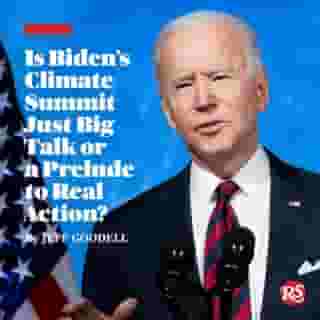
After the first day of President Biden’s two-day climate summit this week, one could easily have the impression that global leaders are very, very good people who take the climate crisis very, very seriously. Biden had summoned together 40 heads of state from all the most powerful nations of the world for what amounted to a giant Zoom meeting to discuss how concerned they all are about the fate of human civilization on a superheated planet.⁠
⁠
Beyond the U.S. commitment to cut greenhouse gases by at least 50 percent below 2005 emissions by 2030, other nations made announcements that sounded meaningful: Canada pledged to cut emissions 40 to 45 percent from 2005 levels by 2030. Japan said it would cut emissions 46 percent from 2013 levels by 2030. South Korea said it would stop financing coal plants overseas. Indian Prime Minister Narendra Modi reconfirmed the country’s vow to install 450 gigawatts of renewable energy by 2030. Modi also announced an India-U.S. Climate and Clean Energy Agenda Partnership for 2030. An analysis by Carbon Action Tracker shows that pledges made at the summit would shave about 3 gigatons off the 20 gigaton emissions gap between current commitments and the 1.5 C goal.⁠
⁠
All of these commitments are important, but they are all equally real or unreal, depending on your level of cynicism about politics and human nature.⁠
⁠
Tap the link in bio to read more.⁠
⁠
Photo: Brendan Smialowsi/AFP/Getty Images

After the first day of President Biden’s two-day climate summit this week, one could easily have the impression that global leaders are very, very good people who take the climate crisis very, very seriously. Biden had summoned together 40 heads of state from all the most powerful nations of the world for what amounted to a giant Zoom meeting to discuss how concerned they all are about the fate of human civilization on a superheated planet.⁠ ⁠ Beyond the U.S. commitment to cut greenhouse gases by at least 50 percent below 2005 emissions by 2030, other nations made announcements that sounded meaningful: Canada pledged to cut emissions 40 to 45 percent from 2005 levels by 2030. Japan said it would cut emissions 46 percent from 2013 levels by 2030. South Korea said it would stop financing coal plants overseas. Indian Prime Minister Narendra Modi reconfirmed the country’s vow to install 450 gigawatts of renewable energy by 2030. Modi also announced an India-U.S. Climate and Clean Energy Agenda Partnership for 2030. An analysis by Carbon Action Tracker shows that pledges made at the summit would shave about 3 gigatons off the 20 gigaton emissions gap between current commitments and the 1.5 C goal.⁠ ⁠ All of these commitments are important, but they are all equally real or unreal, depending on your level of cynicism about politics and human nature.⁠ ⁠ Tap the link in bio to read more.⁠ ⁠ Photo: Brendan Smialowsi/AFP/Getty Images

After the first day of President Biden’s two-day climate summit this week, one could easily have the impression that global leaders are very, very good people who take the climate crisis very, very seriously. Biden had summoned together 40 heads of state from all the most powerful nations of the world for what amounted to a giant Zoom meeting to discuss how concerned they all are about the fate of human civilization on a superheated planet.⁠ ⁠ Beyond the U.S. commitment to cut greenhouse gases by at least 50 percent below 2005 emissions by 2030, other nations made announcements that sounded meaningful: Canada pledged to cut emissions 40 to 45 percent from 2005 levels by 2030. Japan said it would cut emissions 46 percent from 2013 levels by 2030. South Korea said it would stop financing coal plants overseas. Indian Prime Minister Narendra Modi reconfirmed the country’s vow to install 450 gigawatts of renewable energy by 2030. Modi also announced an India-U.S. Climate and Clean Energy Agenda Partnership for 2030. An analysis by Carbon Action Tracker shows that pledges made at the summit would shave about 3 gigatons off the 20 gigaton emissions gap between current commitments and the 1.5 C goal.⁠ ⁠ All of these commitments are important, but they are all equally real or unreal, depending on your level of cynicism about politics and human nature.⁠ ⁠ Tap the link in bio to read more.⁠ ⁠ Photo: Brendan Smialowsi/AFP/Getty Images

Jodi Peckman started her 30 year tenure at 'Rolling Stone' working on the "Random Notes" section of the magazine — and never gave it up. While working on that section, she began to notice certain trends that stayed consistent over the years, particularly with photos of celebrities passing through airports. “I would stop on these pictures of people at the airports, and I found them really compelling, because I thought that they were great photographs, not only just paparazzi snapshots, but actually great photographs in their own right,” she tells us ahead of her new book, 'Come Fly With Me: Flying in Style.'⁠
⁠
The book spans the past 60 years, documenting the fashion, styles and attitudes of celebrities as they pass through the unavoidable public space that is the airport. The collection of images celebrates the fun and nostalgia of flying, and for many the volume speaks even louder now after a year of extremely limited travel. “I think it's really striking a chord in people who have been grounded and shut down and not able to go any place," Peckman explains, "Whether it's for business or pleasure or vacation or anything. It's kind of dreamy to look back at what travel's heyday.”⁠
⁠
Tap the link in bio to see more photos from 'Come Fly With Me: Flying in Style,' which is out now from Rizzoli Books.⁠
⁠
Photo credits⁠
-Dolly Parton and Prince: Alamy/Courtesy of Rizzoli Books⁠
-Whitney Houston: Ron Galella, Ltd./Ron Galella Collection/Getty Images/Courtesy of Rizzoli Books⁠
-Lady Gaga: GVK/Bauer-Griffin/GC Images/Courtesy of Rizzoli Books
Jodi Peckman started her 30 year tenure at 'Rolling Stone' working on the "Random Notes" section of the magazine — and never gave it up. While working on that section, she began to notice certain trends that stayed consistent over the years, particularly with photos of celebrities passing through airports. “I would stop on these pictures of people at the airports, and I found them really compelling, because I thought that they were great photographs, not only just paparazzi snapshots, but actually great photographs in their own right,” she tells us ahead of her new book, 'Come Fly With Me: Flying in Style.'⁠ ⁠ The book spans the past 60 years, documenting the fashion, styles and attitudes of celebrities as they pass through the unavoidable public space that is the airport. The collection of images celebrates the fun and nostalgia of flying, and for many the volume speaks even louder now after a year of extremely limited travel. “I think it's really striking a chord in people who have been grounded and shut down and not able to go any place," Peckman explains, "Whether it's for business or pleasure or vacation or anything. It's kind of dreamy to look back at what travel's heyday.”⁠ ⁠ Tap the link in bio to see more photos from 'Come Fly With Me: Flying in Style,' which is out now from Rizzoli Books.⁠ ⁠ Photo credits⁠ -Dolly Parton and Prince: Alamy/Courtesy of Rizzoli Books⁠ -Whitney Houston: Ron Galella, Ltd./Ron Galella Collection/Getty Images/Courtesy of Rizzoli Books⁠ -Lady Gaga: GVK/Bauer-Griffin/GC Images/Courtesy of Rizzoli Books

Jodi Peckman started her 30 year tenure at 'Rolling Stone' working on the "Random Notes" section of the magazine — and never gave it up. While working on that section, she began to notice certain trends that stayed consistent over the years, particularly with photos of celebrities passing through airports. “I would stop on these pictures of people at the airports, and I found them really compelling, because I thought that they were great photographs, not only just paparazzi snapshots, but actually great photographs in their own right,” she tells us ahead of her new book, 'Come Fly With Me: Flying in Style.'⁠ ⁠ The book spans the past 60 years, documenting the fashion, styles and attitudes of celebrities as they pass through the unavoidable public space that is the airport. The collection of images celebrates the fun and nostalgia of flying, and for many the volume speaks even louder now after a year of extremely limited travel. “I think it's really striking a chord in people who have been grounded and shut down and not able to go any place," Peckman explains, "Whether it's for business or pleasure or vacation or anything. It's kind of dreamy to look back at what travel's heyday.”⁠ ⁠ Tap the link in bio to see more photos from 'Come Fly With Me: Flying in Style,' which is out now from Rizzoli Books.⁠ ⁠ Photo credits⁠ -Dolly Parton and Prince: Alamy/Courtesy of Rizzoli Books⁠ -Whitney Houston: Ron Galella, Ltd./Ron Galella Collection/Getty Images/Courtesy of Rizzoli Books⁠ -Lady Gaga: GVK/Bauer-Griffin/GC Images/Courtesy of Rizzoli Books

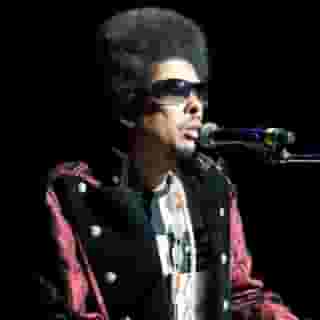
Gregory Jacobs, the charismatic, affable Digital Underground rapper-producer who performed as Shock G and Humpty Hump, died Thursday at the age of 57. Jacobs’ father confirmed the musician’s death to TMZ, though a cause of death remains unknown.⁠
⁠
“34 years ago almost to the day we had a wild idea we can be a hip-hop band and take on the world through it all the dream became a reality and the reality became a nightmare for some,” Digital Underground’s Chopmaster J wrote on Instagram. “And now he’s awaken from the fame long live shock G Aka Humpty Hump and Rest In Peace my Brotha Greg Jacobs!!! #digitalunderground.”⁠
⁠
Over the course of six albums — most notably 1990’s 'Sex Packets' and 1991’s 'Sons of the P' — Digital Underground expanded on Parliament-Funkadelic’s bouncy, elastic funk and outlandish, occasionally goofy stage personas and costumes to become a singular hip-hop group. “A Digital Underground show was like a vaudevillian variety show,” Chopmaster J told Rolling Stone in 2017. While the group went through numerous lineup changes over the years, Jacobs, who co-founded the collective, always remained at the center before disbanding the group in 2008. He assumed various identities, but none more famous than Humpty Hump, the fur-wearing braggadocious rapper whose “Humpty Dance” remains a paragon of classic hip-hop more than 30 years later.⁠
⁠
Tap the link in bio to read more.⁠
⁠
Photo: Getty Images

Gregory Jacobs, the charismatic, affable Digital Underground rapper-producer who performed as Shock G and Humpty Hump, died Thursday at the age of 57. Jacobs’ father confirmed the musician’s death to TMZ, though a cause of death remains unknown.⁠ ⁠ “34 years ago almost to the day we had a wild idea we can be a hip-hop band and take on the world through it all the dream became a reality and the reality became a nightmare for some,” Digital Underground’s Chopmaster J wrote on Instagram. “And now he’s awaken from the fame long live shock G Aka Humpty Hump and Rest In Peace my Brotha Greg Jacobs!!! #digitalunderground.”⁠ ⁠ Over the course of six albums — most notably 1990’s 'Sex Packets' and 1991’s 'Sons of the P' — Digital Underground expanded on Parliament-Funkadelic’s bouncy, elastic funk and outlandish, occasionally goofy stage personas and costumes to become a singular hip-hop group. “A Digital Underground show was like a vaudevillian variety show,” Chopmaster J told Rolling Stone in 2017. While the group went through numerous lineup changes over the years, Jacobs, who co-founded the collective, always remained at the center before disbanding the group in 2008. He assumed various identities, but none more famous than Humpty Hump, the fur-wearing braggadocious rapper whose “Humpty Dance” remains a paragon of classic hip-hop more than 30 years later.⁠ ⁠ Tap the link in bio to read more.⁠ ⁠ Photo: Getty Images

Gregory Jacobs, the charismatic, affable Digital Underground rapper-producer who performed as Shock G and Humpty Hump, died Thursday at the age of 57. Jacobs’ father confirmed the musician’s death to TMZ, though a cause of death remains unknown.⁠ ⁠ “34 years ago almost to the day we had a wild idea we can be a hip-hop band and take on the world through it all the dream became a reality and the reality became a nightmare for some,” Digital Underground’s Chopmaster J wrote on Instagram. “And now he’s awaken from the fame long live shock G Aka Humpty Hump and Rest In Peace my Brotha Greg Jacobs!!! #digitalunderground.”⁠ ⁠ Over the course of six albums — most notably 1990’s 'Sex Packets' and 1991’s 'Sons of the P' — Digital Underground expanded on Parliament-Funkadelic’s bouncy, elastic funk and outlandish, occasionally goofy stage personas and costumes to become a singular hip-hop group. “A Digital Underground show was like a vaudevillian variety show,” Chopmaster J told Rolling Stone in 2017. While the group went through numerous lineup changes over the years, Jacobs, who co-founded the collective, always remained at the center before disbanding the group in 2008. He assumed various identities, but none more famous than Humpty Hump, the fur-wearing braggadocious rapper whose “Humpty Dance” remains a paragon of classic hip-hop more than 30 years later.⁠ ⁠ Tap the link in bio to read more.⁠ ⁠ Photo: Getty Images

In an emotional and candid interview, the Killers' Dave Keuning tells us he's officially returned to the band after a four-year absence. “I could not ... devote myself to two more years of being gone. I was going crazy.”⁠
⁠
The founding member has been recording with the band and hopes to join them on their next tour. "I just needed a break from everything," he tells us. ⁠
⁠
Tap the link in bio to read more.⁠
⁠
Photo: Dana Trippe

In an emotional and candid interview, the Killers' Dave Keuning tells us he's officially returned to the band after a four-year absence. “I could not ... devote myself to two more years of being gone. I was going crazy.”⁠ ⁠ The founding member has been recording with the band and hopes to join them on their next tour. "I just needed a break from everything," he tells us. ⁠ ⁠ Tap the link in bio to read more.⁠ ⁠ Photo: Dana Trippe

In an emotional and candid interview, the Killers' Dave Keuning tells us he's officially returned to the band after a four-year absence. “I could not ... devote myself to two more years of being gone. I was going crazy.”⁠ ⁠ The founding member has been recording with the band and hopes to join them on their next tour. "I just needed a break from everything," he tells us. ⁠ ⁠ Tap the link in bio to read more.⁠ ⁠ Photo: Dana Trippe

The first #EarthDay, on April 22nd, 1970, was, in the parlance of the times, a “happening.” It unfurled across the country in countless iterations. In Manhattan, picnic blankets were set out on Fifth Avenue, which was shut down to traffic. In Boston, people were arrested at Logan Airport for protesting noise pollution. In Tacoma, Washington, high school students rode down a highway on horseback to protest automobiles. In San Francisco, oil was dumped into the reflecting pool at the offices of Standard Oil. And “trash-ins” were held all over, with groups cleaning up aluminum cans and other litter, an activity that would become a fixture of the decades of Earth Days to come.⁠
⁠
 It is unlikely that the words “climate change” or “global warming” were spoken by any of the estimated 20 million people who participated in that first Earth Day. But in other ways, the pleas of participants would be all too familiar to us — that we must limit pollution, along with greed, and listen to scientists if we want an Earth that continues to be habitable. “The environmental community was never about public health until the first Earth Day. That was the big line that people crossed over,” says Kathleen Rogers, president of the Earth Day network. “It’s about our health, the health of the planet. It’s about taking action.”⁠
⁠
Fifty years later, we’re still having the same fights — and the stakes have only gotten higher. Tap the link in bio for a look at the day the modern environmental movement was born.⁠
⁠
Photo: AP @apnews /Shutterstock

The first #EarthDay, on April 22nd, 1970, was, in the parlance of the times, a “happening.” It unfurled across the country in countless iterations. In Manhattan, picnic blankets were set out on Fifth Avenue, which was shut down to traffic. In Boston, people were arrested at Logan Airport for protesting noise pollution. In Tacoma, Washington, high school students rode down a highway on horseback to protest automobiles. In San Francisco, oil was dumped into the reflecting pool at the offices of Standard Oil. And “trash-ins” were held all over, with groups cleaning up aluminum cans and other litter, an activity that would become a fixture of the decades of Earth Days to come.⁠ ⁠ It is unlikely that the words “climate change” or “global warming” were spoken by any of the estimated 20 million people who participated in that first Earth Day. But in other ways, the pleas of participants would be all too familiar to us — that we must limit pollution, along with greed, and listen to scientists if we want an Earth that continues to be habitable. “The environmental community was never about public health until the first Earth Day. That was the big line that people crossed over,” says Kathleen Rogers, president of the Earth Day network. “It’s about our health, the health of the planet. It’s about taking action.”⁠ ⁠ Fifty years later, we’re still having the same fights — and the stakes have only gotten higher. Tap the link in bio for a look at the day the modern environmental movement was born.⁠ ⁠ Photo: AP @apnews /Shutterstock

The first #EarthDay, on April 22nd, 1970, was, in the parlance of the times, a “happening.” It unfurled across the country in countless iterations. In Manhattan, picnic blankets were set out on Fifth Avenue, which was shut down to traffic. In Boston, people were arrested at Logan Airport for protesting noise pollution. In Tacoma, Washington, high school students rode down a highway on horseback to protest automobiles. In San Francisco, oil was dumped into the reflecting pool at the offices of Standard Oil. And “trash-ins” were held all over, with groups cleaning up aluminum cans and other litter, an activity that would become a fixture of the decades of Earth Days to come.⁠ ⁠ It is unlikely that the words “climate change” or “global warming” were spoken by any of the estimated 20 million people who participated in that first Earth Day. But in other ways, the pleas of participants would be all too familiar to us — that we must limit pollution, along with greed, and listen to scientists if we want an Earth that continues to be habitable. “The environmental community was never about public health until the first Earth Day. That was the big line that people crossed over,” says Kathleen Rogers, president of the Earth Day network. “It’s about our health, the health of the planet. It’s about taking action.”⁠ ⁠ Fifty years later, we’re still having the same fights — and the stakes have only gotten higher. Tap the link in bio for a look at the day the modern environmental movement was born.⁠ ⁠ Photo: AP @apnews /Shutterstock

Max Vigilant is the head of operations at the mosquito and vector control unit at the Harris County Department of Public Health. He works out of an un-fancy building on the outskirts of Houston, doing the kind of work that is rarely noticed or covered by the media but which is of vital importance during the climate crisis: keeping the 7 million or so residents of Houston safe from diseases carried by mosquitoes. ⁠
⁠
Mosquitoes are not just irritating insects that wreck your camping trip or backyard BBQ. They are killers. In the long arc of human history, mosquitoes have killed far more people than bullets and bombs have. Malaria, which is carried by mosquitoes, still kills about 400,000 people a year (mostly children in sub-Saharan Africa). Mosquitoes carry a range of diseases, from yellow fever to Zika to Dengue fever. ⁠
⁠
In this Rolling Stone RS Reports video, contributing editor Jeff Goodell hangs with Vigilant as he traps mosquitos and brings them to the lab to run genetic tests that can identify which viruses, if any, they are carrying. Along the way, Vigilant talks about the attack patterns of different mosquito species, why vector-borne diseases are a climate-justice issue, and how the climate crisis is making the entire Gulf Coast more hospitable for disease-carrying insects.⁠
⁠
Tap the link in bio to watch the full video.

Max Vigilant is the head of operations at the mosquito and vector control unit at the Harris County Department of Public Health. He works out of an un-fancy building on the outskirts of Houston, doing the kind of work that is rarely noticed or covered by the media but which is of vital importance during the climate crisis: keeping the 7 million or so residents of Houston safe from diseases carried by mosquitoes. ⁠ ⁠ Mosquitoes are not just irritating insects that wreck your camping trip or backyard BBQ. They are killers. In the long arc of human history, mosquitoes have killed far more people than bullets and bombs have. Malaria, which is carried by mosquitoes, still kills about 400,000 people a year (mostly children in sub-Saharan Africa). Mosquitoes carry a range of diseases, from yellow fever to Zika to Dengue fever. ⁠ ⁠ In this Rolling Stone RS Reports video, contributing editor Jeff Goodell hangs with Vigilant as he traps mosquitos and brings them to the lab to run genetic tests that can identify which viruses, if any, they are carrying. Along the way, Vigilant talks about the attack patterns of different mosquito species, why vector-borne diseases are a climate-justice issue, and how the climate crisis is making the entire Gulf Coast more hospitable for disease-carrying insects.⁠ ⁠ Tap the link in bio to watch the full video.

Max Vigilant is the head of operations at the mosquito and vector control unit at the Harris County Department of Public Health. He works out of an un-fancy building on the outskirts of Houston, doing the kind of work that is rarely noticed or covered by the media but which is of vital importance during the climate crisis: keeping the 7 million or so residents of Houston safe from diseases carried by mosquitoes. ⁠ ⁠ Mosquitoes are not just irritating insects that wreck your camping trip or backyard BBQ. They are killers. In the long arc of human history, mosquitoes have killed far more people than bullets and bombs have. Malaria, which is carried by mosquitoes, still kills about 400,000 people a year (mostly children in sub-Saharan Africa). Mosquitoes carry a range of diseases, from yellow fever to Zika to Dengue fever. ⁠ ⁠ In this Rolling Stone RS Reports video, contributing editor Jeff Goodell hangs with Vigilant as he traps mosquitos and brings them to the lab to run genetic tests that can identify which viruses, if any, they are carrying. Along the way, Vigilant talks about the attack patterns of different mosquito species, why vector-borne diseases are a climate-justice issue, and how the climate crisis is making the entire Gulf Coast more hospitable for disease-carrying insects.⁠ ⁠ Tap the link in bio to watch the full video.

Despite a string of decidedly solid records, former Bad Boy MC Black Rob never took off. His story is another unfortunate example of a rap star who never got to see their potential fully realized.⁠
⁠
Tap the link in bio to read about why Black Rob deserved so much more.⁠
⁠
Photo: Walik Goshorn/MediaPunch/IPX/AP @apnews

Despite a string of decidedly solid records, former Bad Boy MC Black Rob never took off. His story is another unfortunate example of a rap star who never got to see their potential fully realized.⁠ ⁠ Tap the link in bio to read about why Black Rob deserved so much more.⁠ ⁠ Photo: Walik Goshorn/MediaPunch/IPX/AP @apnews

Despite a string of decidedly solid records, former Bad Boy MC Black Rob never took off. His story is another unfortunate example of a rap star who never got to see their potential fully realized.⁠ ⁠ Tap the link in bio to read about why Black Rob deserved so much more.⁠ ⁠ Photo: Walik Goshorn/MediaPunch/IPX/AP @apnews

Former Minneapolis Police Officer Derek Chauvin was found guilty of second-degree murder, third-degree murder, and second-degree manslaughter on Tuesday April 20th.⁠
⁠
After the verdict was read, Chauvin was taken into the custody of the Hennepin County Sheriff’s Office. It’s unclear when Chauvin will be sentenced. Per 'The New York Times,' a defendant like Chauvin with no criminal history could face 12-and-a-half years for both murder charges, though the second-degree charge carries a max of 40 years in prison, while third-degree carries a max of 25 years. The manslaughter charge carries a maximum sentence of four years.⁠
⁠
Tap the link in bio to read more.

Former Minneapolis Police Officer Derek Chauvin was found guilty of second-degree murder, third-degree murder, and second-degree manslaughter on Tuesday April 20th.⁠ ⁠ After the verdict was read, Chauvin was taken into the custody of the Hennepin County Sheriff’s Office. It’s unclear when Chauvin will be sentenced. Per 'The New York Times,' a defendant like Chauvin with no criminal history could face 12-and-a-half years for both murder charges, though the second-degree charge carries a max of 40 years in prison, while third-degree carries a max of 25 years. The manslaughter charge carries a maximum sentence of four years.⁠ ⁠ Tap the link in bio to read more.

Former Minneapolis Police Officer Derek Chauvin was found guilty of second-degree murder, third-degree murder, and second-degree manslaughter on Tuesday April 20th.⁠ ⁠ After the verdict was read, Chauvin was taken into the custody of the Hennepin County Sheriff’s Office. It’s unclear when Chauvin will be sentenced. Per 'The New York Times,' a defendant like Chauvin with no criminal history could face 12-and-a-half years for both murder charges, though the second-degree charge carries a max of 40 years in prison, while third-degree carries a max of 25 years. The manslaughter charge carries a maximum sentence of four years.⁠ ⁠ Tap the link in bio to read more.

Jim Steinman, the prolific songwriter and composer who worked with Meat Loaf, Bonnie Tyler, Celine Dion and more, has died at age 73.⁠
⁠
Tap the link in our bio to read more.⁠
⁠
Photo: Scott Weiner/MediaPunch/IPx/AP @apnews

Jim Steinman, the prolific songwriter and composer who worked with Meat Loaf, Bonnie Tyler, Celine Dion and more, has died at age 73.⁠ ⁠ Tap the link in our bio to read more.⁠ ⁠ Photo: Scott Weiner/MediaPunch/IPx/AP @apnews

Jim Steinman, the prolific songwriter and composer who worked with Meat Loaf, Bonnie Tyler, Celine Dion and more, has died at age 73.⁠ ⁠ Tap the link in our bio to read more.⁠ ⁠ Photo: Scott Weiner/MediaPunch/IPx/AP @apnews